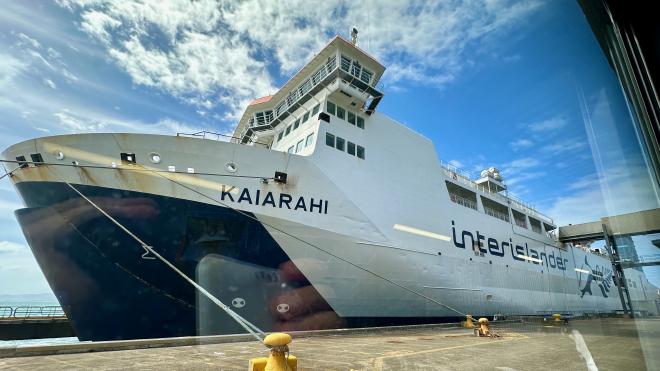
We caught the train from Johnsonville to downtown Wellington, and then a shuttle from there to the ferry terminal. This was our first view of our ferry, as we walked out from the terminal.
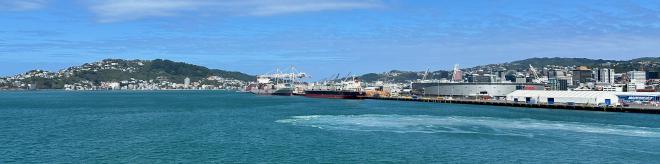
Leaving the city, we had wonderful views of the harbour.
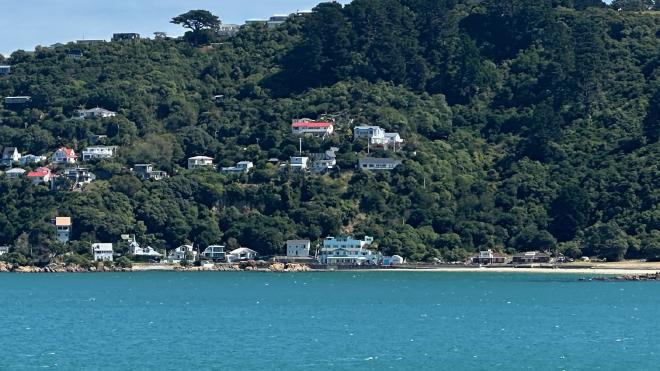
As we rounded Sinclair Head, we spotted Scorching Bay, which we’d visited with Tim. The Scorch-O-Rama Cafe we’d stopped at is in the blue building on the beach at the centre of this photograph.
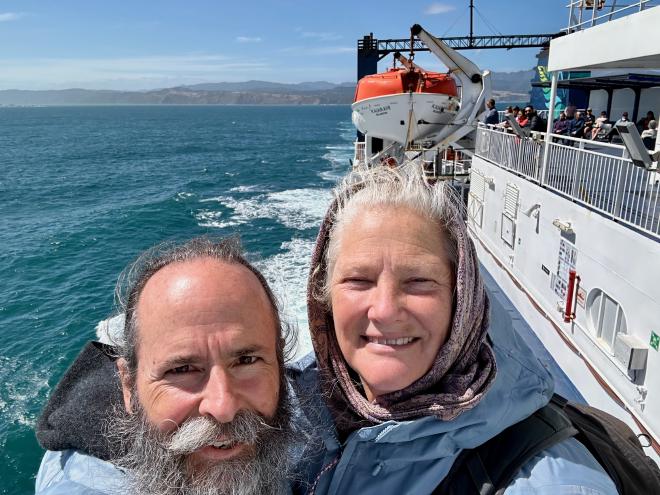
Eventually we pulled out of Wellington Harbour and left the North Island behind us.
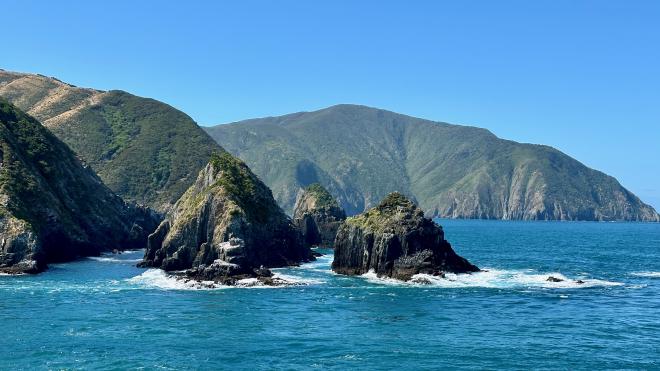
Whenever we’d talked to someone about our visit to New Zealand, they always told us that South Island was the place for rugged natural beauty. We got a good sense of that pretty much immediately; these rocks are at the entrance to the Marlborough Sound.
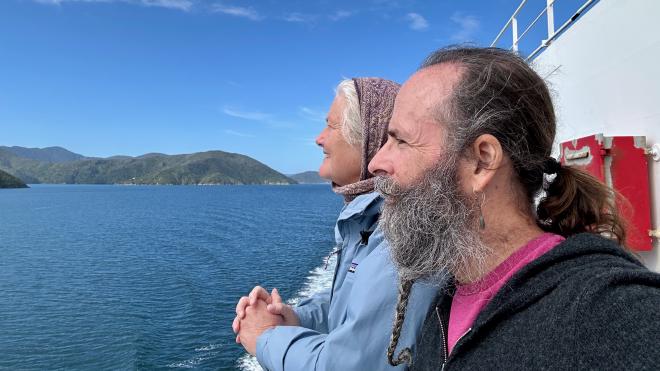
The ferry ride from Wellington to Picton is billed as one of the most spectacular in the world, and we have to say that it didn’t disappoint.
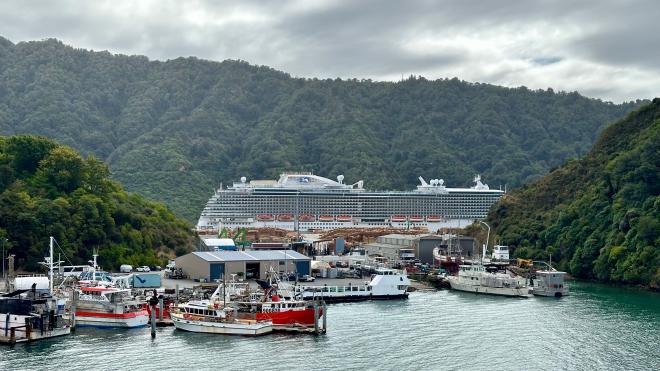
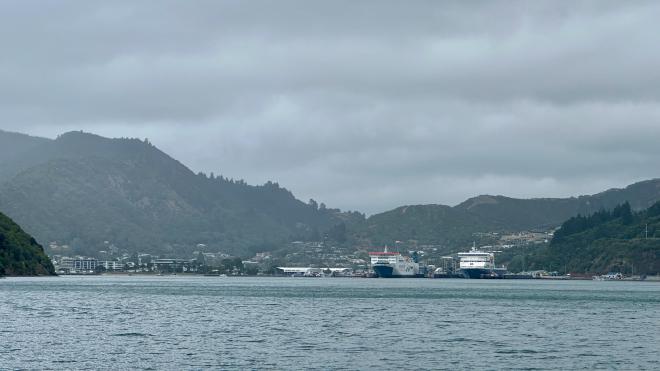
Pulling in to Picton we spotted this cruise ship, docked in a separate bay beside the main harbour.
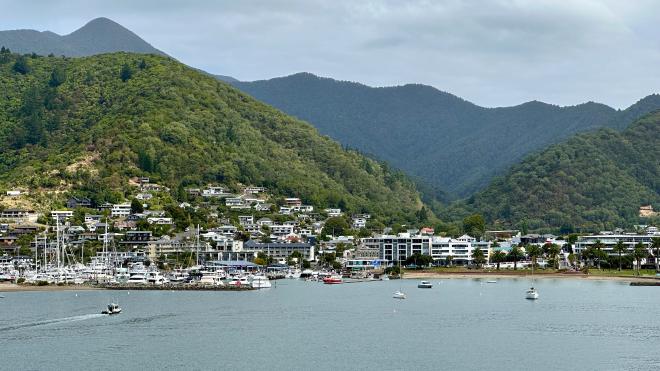
The town of Picton looks particularly pretty from the water.
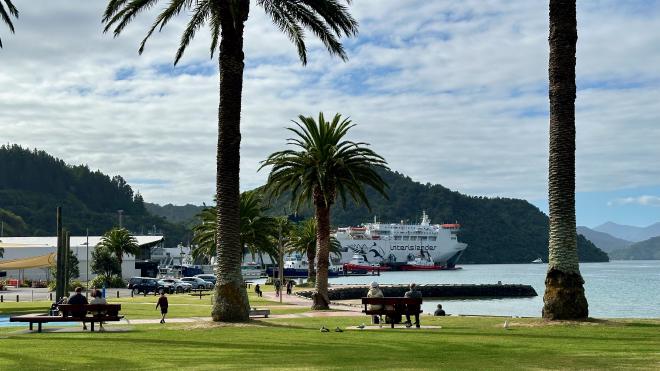
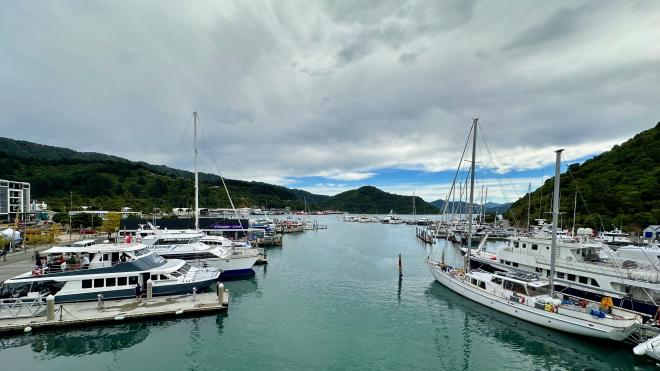
We walked the short distance from the dock to our apartment. This was the view looking back towards the ferry.
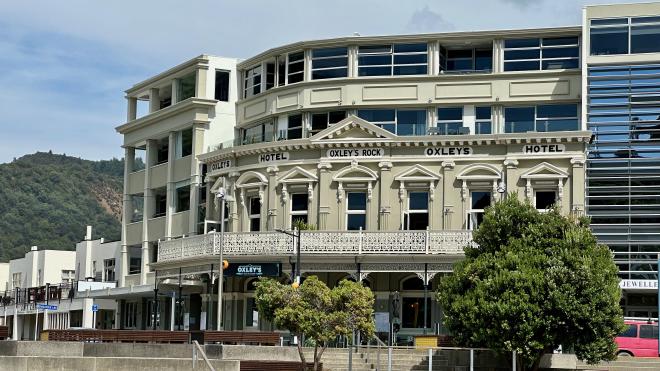
Our apartment was on the top floor of Oxley’s Hotel, built in the 1870s and 1880s.
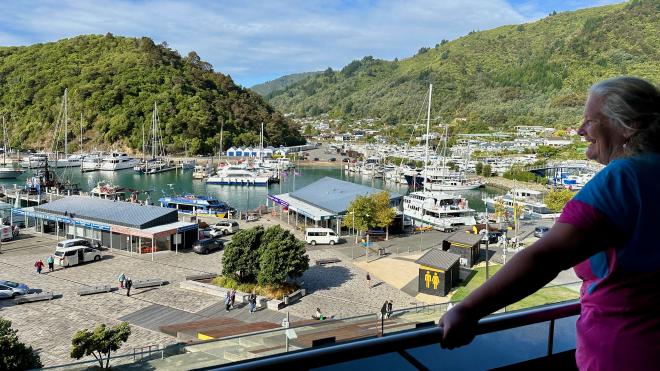
As I’m sure you’ll agree, the view was pretty good.
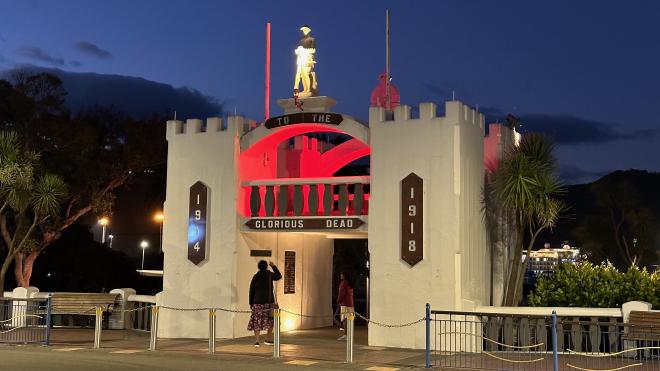
That evening we had dinner in the hotel’s restaurant, and went for a walk through town. This unusual memorial to the dead of World War I faces directly onto the foreshore.
The next morning was our third attempt at getting COVID booster shots, at a pharmacy just around the corner from our apartment. The pharmacist was happy to help, but was initially stumped as he needed a New Zealand health system identifier to vaccinate us. Normally anyone with a passport can have an identifier created, but this was a Saturday and the government department the pharmacist needed to call for the number is closed on the weekend. He suggested we come back Monday morning, but when we explained our travel plans, he decided to take all our information, give us the shots, and sort the paperwork out later. Victory! Big thanks to Graeme, Picton’s friendly pharmacist.
The next afternoon we booked a boat tour of Queen Elizabeth sound. This was the “mail run” tour, which includes mail deliveries to some of the remote homes and businesses in the Sound that aren’t reachable by road. As you can see (cue ominous music) the day started off warm and sunny; in fact we’d eaten a lunch of delicious sandwiches from Toastie Lords on the foreshore in our t-shirts just before departing.
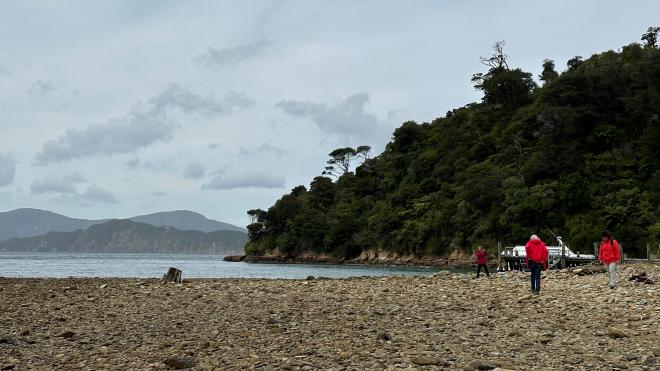
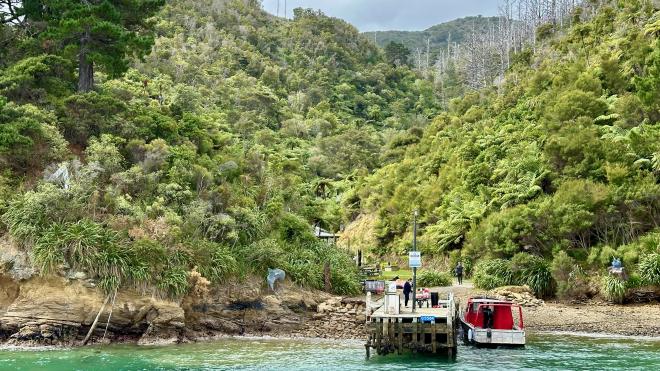
Our first stop was Ship Cove, which Captain Cook visited on several occasions during his three voyages to New Zealand between 1770 and 1777.
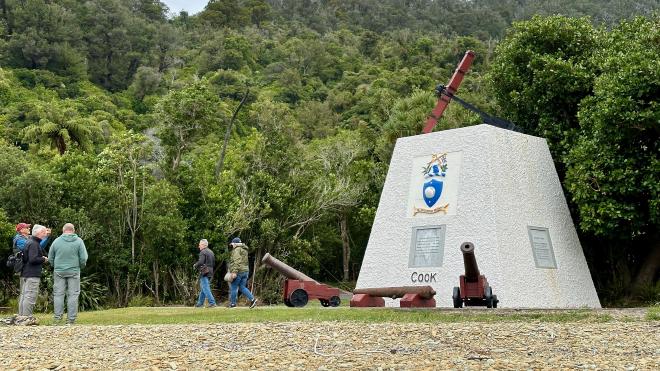
The Cove features a memorial to Captain Cook, installed in 1913.
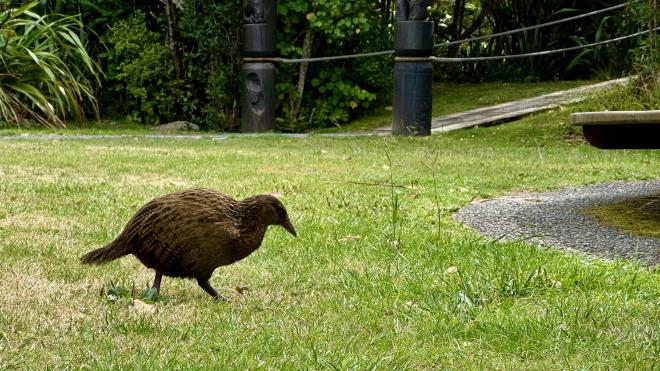
There were several of these birds wandering the memorial grounds.
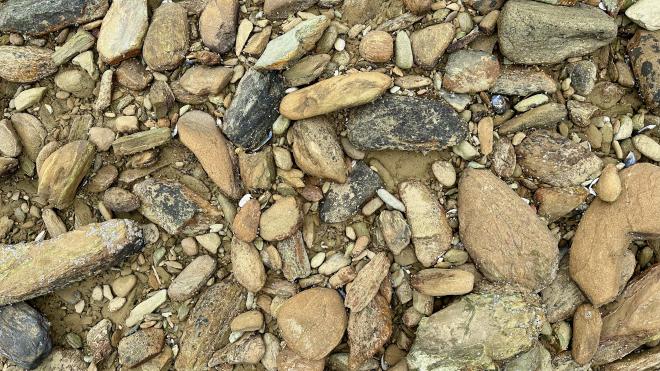
The rocks on the beach were weathered in particularly interesting ways.
From Ship Cove we proceeded around Queen Charlotte Sound, stopping as promised at several homes and businesses to drop off the mail. Most places had dogs that happily came out to meet the boat; the skipper had treats ready for all of them.
By the time we got back to Picton the temperature had dropped, the sky had clouded over, and it was beginning to rain. All but one other person abandoned the outside seating and went into the boat. We bundled up in all our layers, including our rain coats, and stuck it out. We started on the top deck, damn it, and we were going to finish on the top deck!
From the dock we went straight to an Irish pub just down the block, where we warmed up with good food and Guinness.
Picton is in the Marlborough region of the South Island, which is renowned for its wineries. So, on the recommendation of several people, we decided to book a visit to several of them with Marlborough Wine Tours.
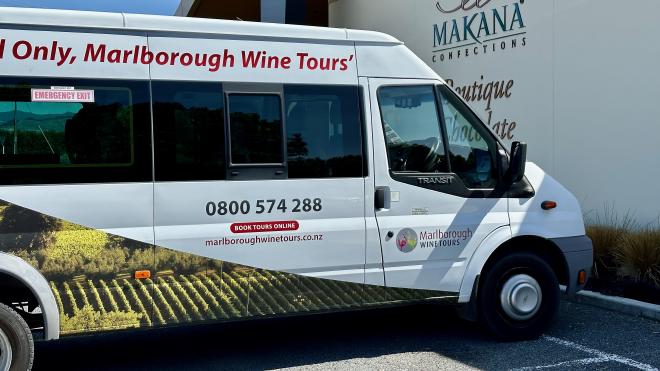
Our guide picked us up in the tour van directly from our apartment, and we headed south to Blenheim to collect the other guests.
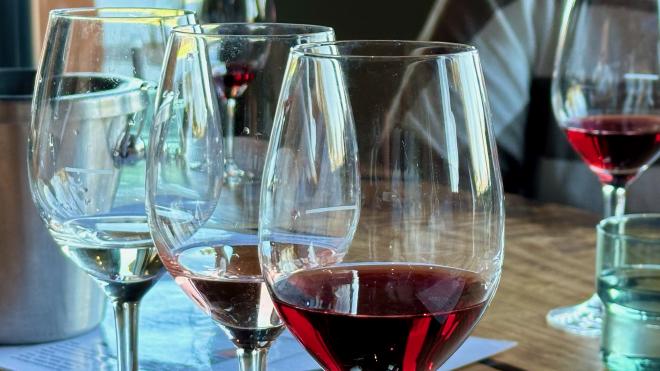
We visited a total of five wineries on the tour: Forest, Framinham, Saint Clair, Ant Moore, and Whitehaven. Most of our day was spent like this, with a row of four or five glasses in front of us, trying the wine under the guidance of someone from the winery.
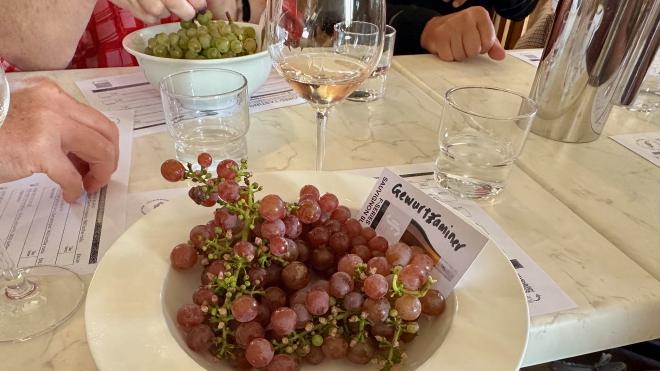
It was harvest season during our tour, and the Framingham winery provided us with samples of the various grapes that go into their wines.
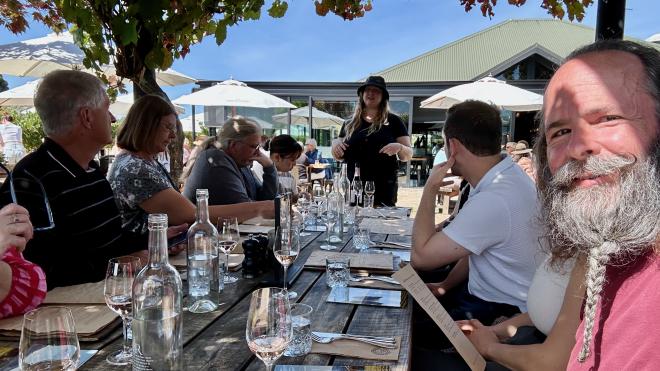
We had lunch at Saint Clair. This is our sommelier for the visit, giving us a rundown of the menu and the wines we were about to sample.
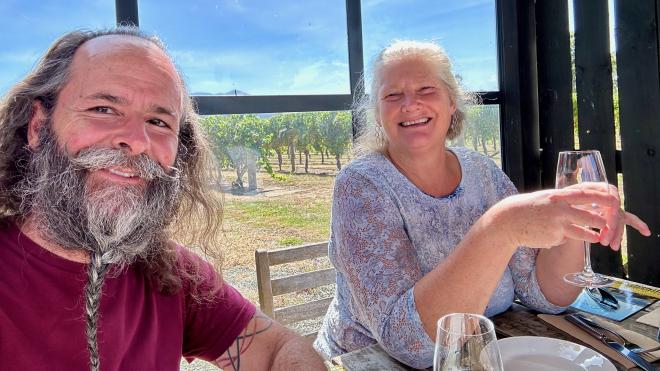
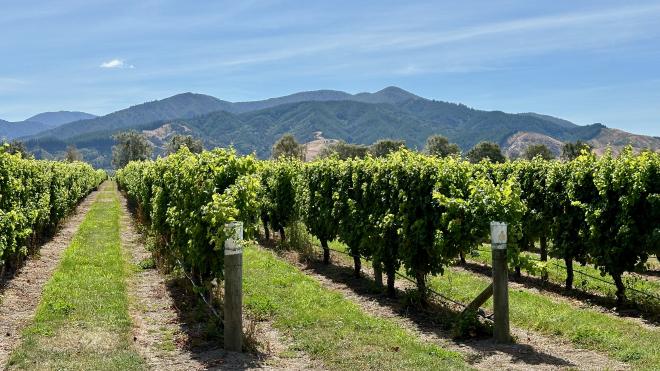
Our table overlooked Saint Clair’s vineyards.
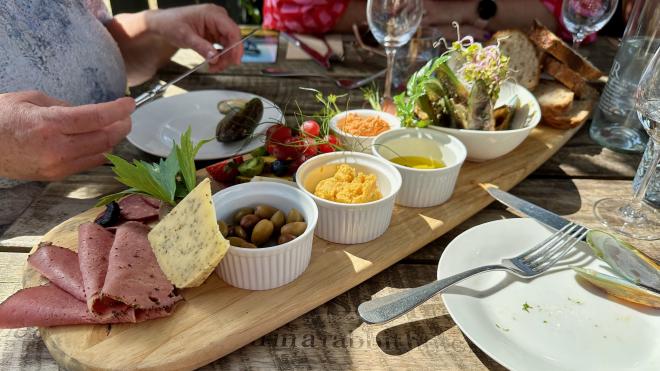
There were lots of great options for food. We ordered their tasting platter, which consisted mostly of products from the region. A highlight was the green-lipped mussels which are found only in New Zealand.
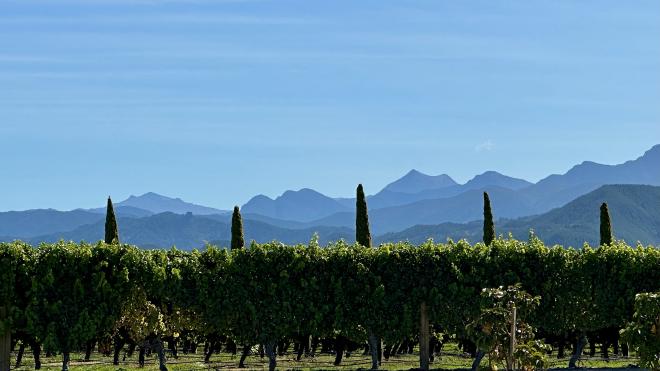
The vineyards, with hills in the distance, made for some lovely views.
The next day we had a short bus ride to Nelson, but that wasn’t leaving until 1 pm. Fortunately we were able to store our bags in lockers at the i-Site, which is also the bus terminal, so we could go for a walk and enjoy the pleasant weather.
We walked across Coathanger Bridge towards the Victoria Domain, a park with walking and cycling tracks on the hill overlooking the marina. This is the view from the top of the bridge.
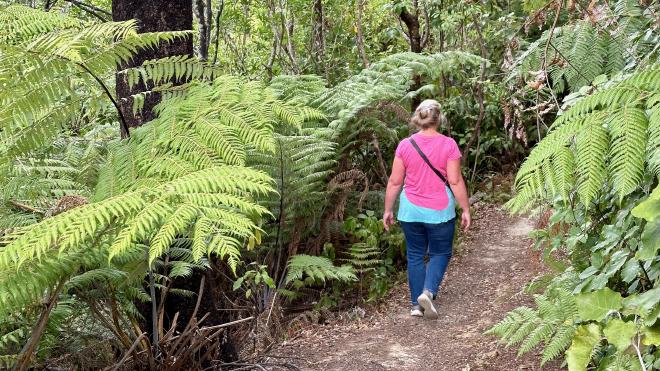
The trails were generally well-maintained and took us through some beautiful natural forest.
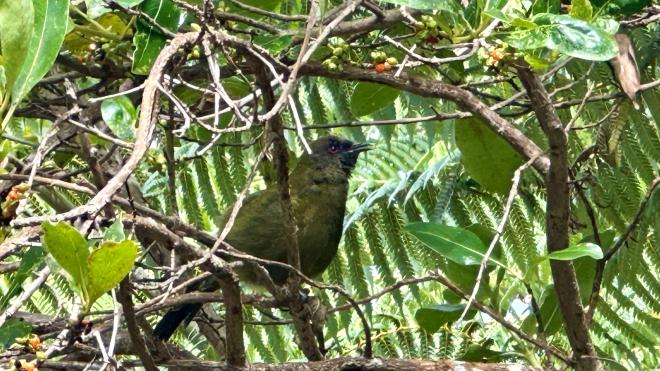
Early in our walk, we caught sight of this interesting bird.
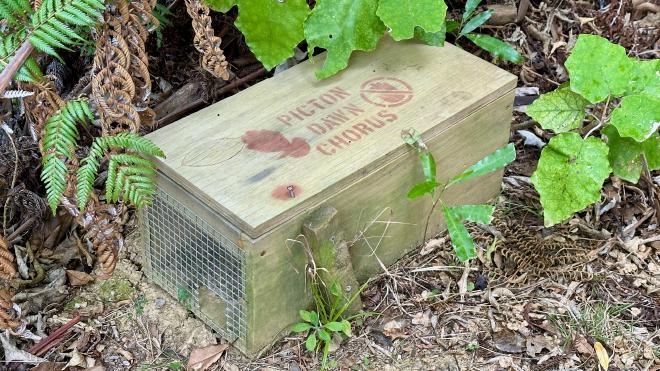
New Zealand has no native predators so much of its wildlife, particularly the ground-dwelling birds, has no defences against them. Unfortunately there are invasive rats, stoats, foxes, and Australian bush possums, introduced either accidentally or deliberately since European arrival, all of which prey on the native species. New Zealand has an ambitious plan to be predator-free by 2050, and they are aggressively trapping and poisoning the predators to get there. Some of the traps are placed by government conservation authorities. Others, like this one are placed by local groups.
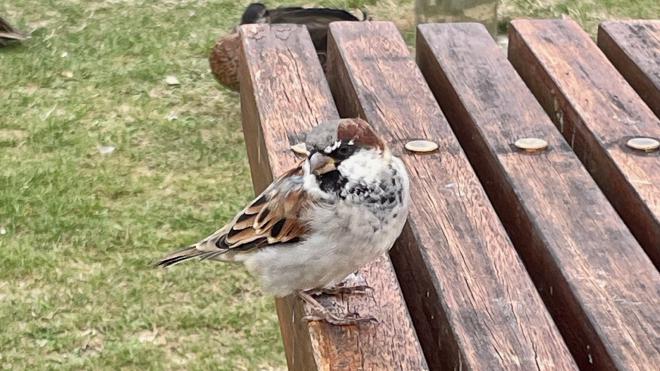
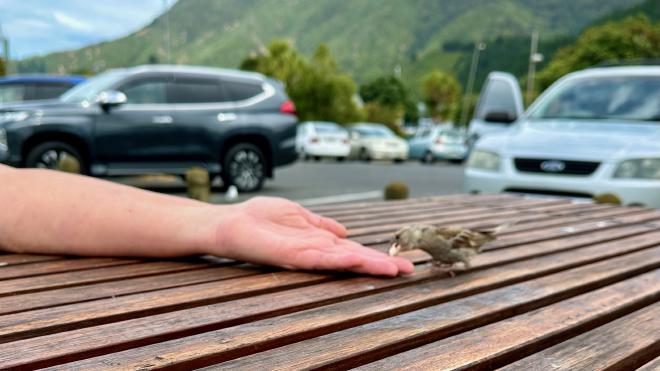
After our walk we had a picnic lunch near the i-Site, where we were joined by some optimistic birds.
This one was bold enough to take bread bits directly from Karen’s hands.
Then it was onto the bus, and on our way to Nelson.